The offer is framed as a connected problem
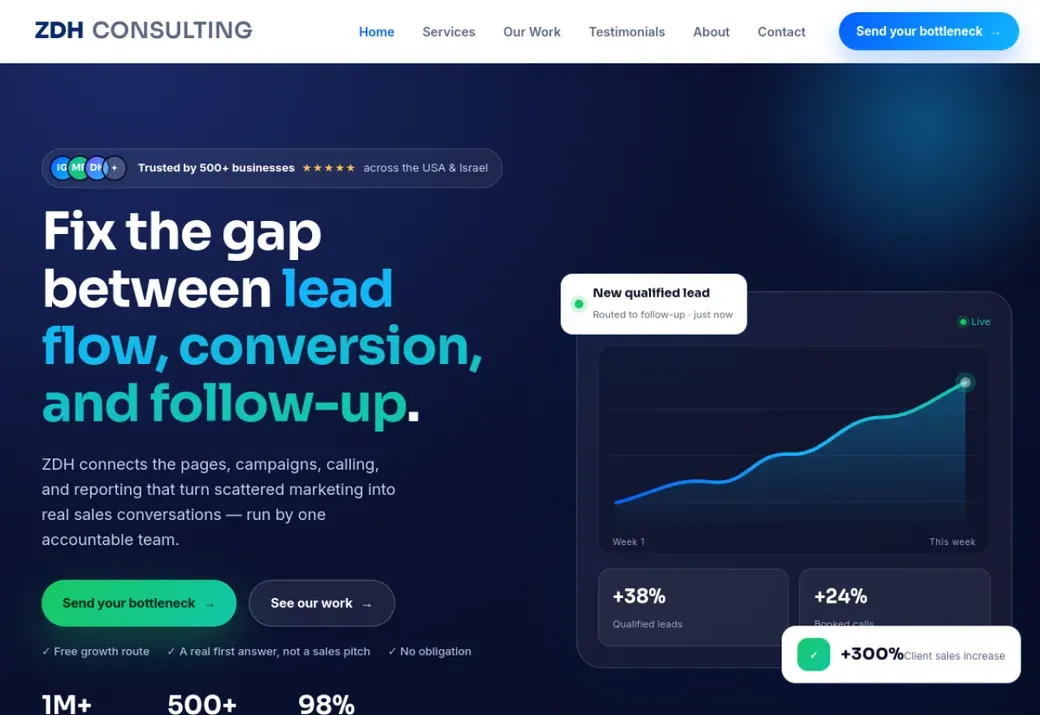
The heading names lead flow, conversion and follow-up together. The paragraph below connects pages, campaigns, calling and reporting. This gives the visitor a description of the work across a sales process rather than a disconnected list of marketing services.
The order matters for a consultancy. A business owner may recognise a follow-up problem without knowing whether to ask for a new page, an advertising campaign or sales support. Starting with the problem leaves room for diagnosis before selecting a service.
The main action asks for context
“Send your bottleneck” appears both in the header and below the opening explanation. “See our work” is the secondary action. The label asks the visitor to describe what is happening in their business, which fits the problem-led introduction.
A label this specific creates an expectation for the next screen. The enquiry should invite a description of the problem; sending the visitor straight to a pricing table or a general newsletter would not complete the task suggested by the button. The screenshot does not establish the destination’s behaviour.
The reporting panel explains a system visually
The right side contains a dark dashboard-style panel with a rising line, a lead notification and metric cards. The blue, cyan and green treatments connect it to the highlighted words and enquiry button on the left. It is a visual explanation of connected marketing and follow-up.
Percentages and client totals are visible in that panel and elsewhere in the capture. They are claims on the depicted website, not results independently verified for this study. A real consultancy should support such statements with a defined period, measurement method and appropriate permission.
What to retain, and what needs supporting evidence
The reusable design decision is the pairing of a specific business problem with a concrete enquiry label. The graphic can help explain the service, but it cannot substitute for evidence of outcomes. Screenshots of a reporting interface are not proof that a client achieved the illustrated change.
For a stronger project page, the next useful material would be an actual before-and-after workflow, documented scope and a measured result with its context. Without that material, the defensible discussion is about page structure and the visitor’s next step.